5 Lessons From a Grandmaster Marvel Rivals Player Who Blamed His Teammates for Being Hardstuck
Want articles like this for your own video to promote it on YouTube and Google? Order them through the Telegram bot @sat_sit_bot. It writes articles around your video, embeds the video and publishes them on popular niche websites (no ads). Free trial — 50 articles.
· based on the channel Flats
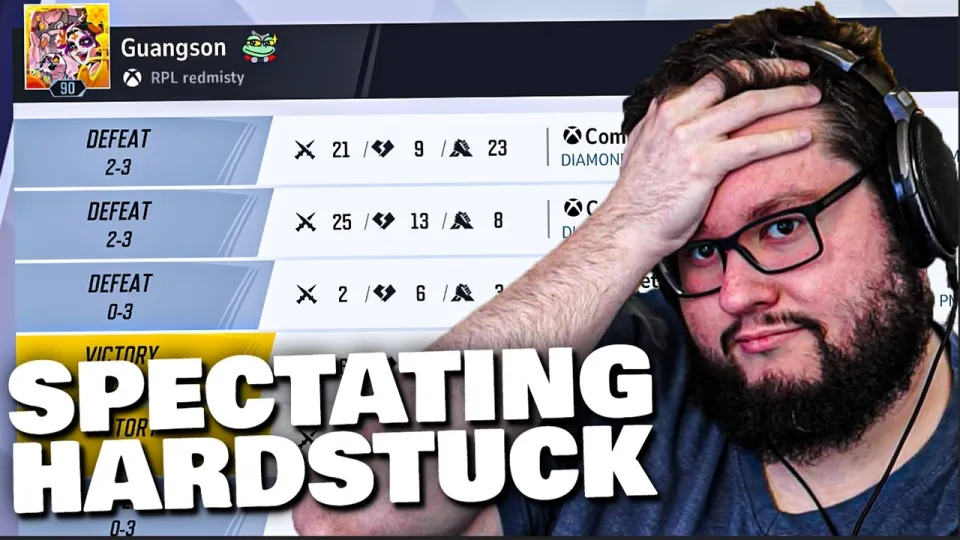
Marvel Rivals players who call themselves hardstuck usually blame matchmaking and teammates, and the player Flats spectated in this breakdown was no exception: he was in Grandmaster, a rank most players never reach, yet insisted his teams were holding him back. Watching his gameplay from a spectator's camera, the real problems were mechanical and mental, not teammates. Flats, a long-time Overwatch coach who now covers Marvel Rivals, does this kind of review live on his Twitch channel, where viewers can watch the full spectating session.
What does "hardstuck" actually mean in Marvel Rivals
Hardstuck describes a player whose rank has stopped moving despite a large number of matches, and in Marvel Rivals the ranked ladder is forgiving enough that a negative win rate can still produce slow climbs. That is exactly the environment where the label gets misused: a Grandmaster player is already in the top slice of the player base, so calling himself stuck because of teammates ignores that his own decisions set the ceiling. The spectated player's case followed the classic pattern — strong rank, weak fundamentals, and a fixed belief that the match was lost before it began.
The Cloak & Dagger problem: playing half a hero
The most obvious flaw was that he played Dagger and essentially never played Cloak, which turns one of Marvel Rivals' most flexible strategists into a heal-bot. Cloak & Dagger are designed as a two-in-one kit: Dagger provides healing, the light-force veil and the blinding wall, while Cloak brings the damage window, the terror cape and the phase that dodges burst. A player who stays on Dagger for the whole fight gives up the swap that makes the character worth picking. Viewers picked up on it immediately, and the joke that he was "playing Dagger holding the Cloak" sums up the issue better than any coaching note.
Ego versus evidence: the accountability gap
He described himself as a Spider-Man main, and the spectating session showed the same habit that gets associated with that pick: blaming the team instead of reviewing his own deaths. The pattern repeated across the match — a failed ultimate, a missed health pack, a support duel lost — and each time the explanation pointed outward. In a hero shooter, the fastest way out of a plateau is to treat every death as a decision you made, because in Marvel Rivals the respawn timer and the walk back to the point punish bad positioning far more than a weak teammate does.
Five habits that keep a Marvel Rivals player stuck
- Treating a two-form hero as a single-form hero. Swapping between Cloak and Dagger based on cooldowns and pressure is the baseline; staying on Dagger all game removes the character's damage and escape tools.
- Ignoring health packs. Walking past a pack while searching for one wastes the seconds that decide a fight, and it signals the player is not reading the map.
- Wasting area ultimates at point-blank range. A Magneto ultimate that lands nowhere is a full cooldown thrown away, and ult economy decides close ranked games.
- Refusing to swap. Marvel Rivals rewards counter-picking; a Spider-Man main who never changes hero hands the enemy team a free advantage.
- Blaming the lobby. A player who queues with a negative win rate and still climbs slowly is being carried by the system, not held back by it.
Why a negative win rate can still climb in Marvel Rivals
Ranked systems in team games award points for wins and subtract fewer for losses, and Marvel Rivals' ladder includes protection and bonus mechanics that let a sub-50% player drift upward over hundreds of games. That produces exactly the profile the spectating session exposed: a Grandmaster badge earned through volume rather than improvement. The practical takeaway is to check your own win rate before blaming teammates — if it sits below even, the climb is coming from the system, not from your play. Metal-rank players watching the breakdown noted that seeing this level of decision-making in Grandmaster was more discouraging than the mistakes themselves.
Typical questions viewers raised after the spectating session
Viewers wanted to know whether the player's teammates really were the problem, how much of the blame belonged to the hero choice, and whether the humiliation was self-inflicted. The consensus landed on a simple point: the session proved that teammates can hold you back, just not in the way the player intended. Others asked how a player with this many holes in his game reached Grandmaster at all, and the answer came back to match volume, rank protection and the low cost of losses. A running joke about the player's in-game name and a wish to face him on the enemy team rounded out the reaction.
Where to watch Flats break down Marvel Rivals gameplay
Flats streams Marvel Rivals and Overwatch spectating sessions regularly, and the full VOD of this review is available on his channels. All the places to follow him:
- Twitch: https://www.twitch.tv/flats
- Discord: https://discord.gg/flats
- Twitter: https://twitter.com/Flats_Ow
- TikTok: https://www.tiktok.com/@flats_ow
- Facebook: https://www.facebook.com/FlatsTTV
Final thoughts on the hardstuck Marvel Rivals mindset
The spectating session is a useful mirror for any Marvel Rivals player who feels stuck: the rank badge is not proof of skill, and the hero you pick is only as good as the half of the kit you actually use. Flats, the author of this video breakdown, builds the case from gameplay rather than insults, which is why the lessons transfer to any rank. Fix the health-pack habit, learn both forms of Cloak & Dagger, and stop spending ultimates on nothing, and the ladder starts responding. If you want more live reviews like this one, join Flats on Twitch and watch the next spectating session as it happens.
Key takeaways
- Flats spectated a Marvel Rivals player who insisted he was hardstuck because of his teammates.
- The player was in Grandmaster, a rank far above average, yet claimed he could not climb.
- He played Cloak & Dagger but spent most of the match as Dagger, barely using Cloak's kit.
- He walked past a health pack while looking for a health pack and wasted a Magneto ultimate at close range.
- He called himself a Spider-Man main, which viewers linked to his refusal to take accountability.
Source: I Spectated Someone Who Claimed To Be Hardstuck In Marvel Rivals · Markdown version
Questions & answers
Was the Marvel Rivals player really hardstuck because of his teammates?
No. He was already in Grandmaster, a rank most players never reach, and his losses came from his own decisions: staying on Dagger, missing health packs and wasting ultimates. The spectating session showed that teammates were not the limiting factor.
Why is playing only Dagger with Cloak & Dagger a mistake?
Cloak & Dagger are built around swapping between the two forms. Dagger supplies healing and utility, while Cloak adds damage, the terror cape and an escape. Staying on Dagger all match removes half the kit and turns a flexible strategist into a pure heal-bot.
How can a player with a negative win rate climb to Grandmaster in Marvel Rivals?
Ranked ladders award more points for wins than they remove for losses and include protection mechanics, so a sub-50% player can drift upward over hundreds of games. That produces high ranks earned through volume rather than improvement.
What is the fastest way to stop being hardstuck in Marvel Rivals?
Review your own deaths instead of your teammates' play, check your win rate honestly, learn both forms of your hero, and use ultimates only when they can win a fight. Counter-picking and map awareness matter more than raw aim at most ranks.